

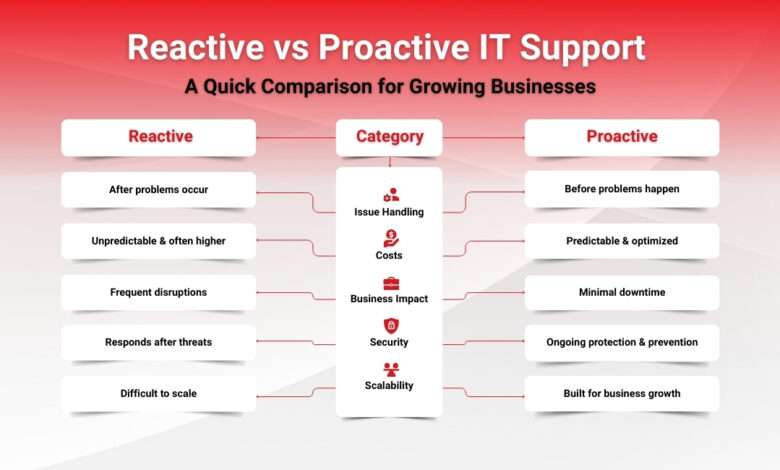
Before exploring why one strategy is superior, it helps to understand the core difference:
-
Reactive IT responds after a problem occurs.
-
Proactive IT aims to prevent issues before they ever surface.
While reactive support may seem simpler, it often leads to unexpected downtime, security vulnerabilities, and higher long-term costs.
Luxury vessels require sophisticated technology management, making Yacht IT Support an important service for owners and operators. Experts provide proactive maintenance, software updates, and technical assistance to keep navigation systems, communication platforms, and entertainment networks functioning optimally throughout every journey.
The Limitations of Reactive IT Support
Reactive support operates on a break-fix model. Problems get attention only when systems fail or performance drops.
Key Drawbacks
-
Unpredictable expenses due to emergency fixes
-
Extended downtime harming productivity
-
Higher cybersecurity risk when threats go undetected
-
Strain on internal teams scrambling to resolve issues
-
No long-term improvement, only temporary patching
Business environments today change rapidly, and reactive IT simply cannot keep pace with rising security threats or complex systems.
Why Proactive IT Support Is the Better Choice
Enhanced System Reliability
Proactive teams use continuous monitoring tools to detect anomalies early. This approach significantly reduces the chances of system outages and keeps operations smooth.
Stronger Cybersecurity Defense
Modern cyberattacks evolve quickly. With proactive IT support, organizations benefit from:
-
Regular security audits
-
Threat detection and response systems
-
Patch management and updates
-
Ongoing vulnerability scanning
These steps shield the business before threats can escalate.
Cost Efficiency Over Time
Although proactive services may require a predictable monthly investment, they eliminate costly emergencies and minimize downtime—ultimately saving money in the long run.
Better Performance Across the Organization
With optimized networks, regularly updated hardware, and efficient workflows, employees face fewer disruptions. Productivity rises naturally.
Strategic Technology Planning
Proactive IT isn’t just about prevention; it also helps organizations plan for the future. This includes:
-
Budget forecasting
-
Hardware lifecycle planning
-
Scalability recommendations
-
Cloud and digital transformation readiness
Such strategic guidance empowers companies to grow confidently.
Proactive vs. Reactive: A Quick Comparison
| Feature | Proactive IT | Reactive IT |
|---|---|---|
| Issue Handling | Prevents issues early | Fixes problems after failure |
| Cost | Predictable and controlled | Sudden and often high |
| Security | Ongoing protection | Higher vulnerability |
| Downtime | Minimal | Frequent or prolonged |
| Business Impact | Supports long-term growth | Interrupts operations |
How to Transition from Reactive to Proactive IT
Shifting from break-fix to preventive maintenance involves thoughtful steps:
1. Conduct an IT Environment Assessment
Identify weaknesses, outdated systems, and overlooked risks.
2. Implement Continuous Monitoring
Deploy tools that track performance, detect threats, and provide real-time insights.
3. Schedule Maintenance & Updates
Routine patching, firmware updates, and equipment checks reduce performance dips and failures.
4. Adopt Managed IT Services
Partnering with a managed service provider (MSP) ensures expert oversight without overloading internal teams.
5. Build a Long-Term IT Roadmap
Strategic planning ensures your technology supports future business goals and reduces surprises.
The Bottom Line
Proactive IT support empowers businesses with stability, protection, and efficiency. By shifting away from reactive firefighting and embracing strategic prevention, organizations can reduce costs, improve performance, and stay ahead of evolving digital challenges.
FAQs
1. Is proactive IT support more expensive than reactive services?
It typically offers predictable monthly costs and often proves more cost-effective long-term due to fewer emergencies.
2. Can small businesses benefit from proactive IT support?
Absolutely. Even small teams face cyber risks and downtime challenges, making preventive care essential.
3. What tools are commonly used in proactive IT?
Monitoring software, automated patching tools, threat detection systems, and backup solutions are common.
4. Does proactive IT support eliminate downtime entirely?
No system is perfect, but proactive strategies significantly reduce the frequency and length of outages.
5. How quickly can proactive IT detect issues?
Most monitoring systems provide real-time alerts, enabling near-instant detection of abnormalities.
6. Do proactive IT providers help with compliance requirements?
Yes. Many offer support for regulatory standards such as HIPAA, GDPR, and industry-specific policies.
7. What’s the first step for a company wanting to switch to proactive IT?
An IT assessment is usually the starting point to identify risks, outdated systems, and needed improvements.


